
2026-08-29 ·
How To Spot Rodent Damage To Electrical Wires In Attics
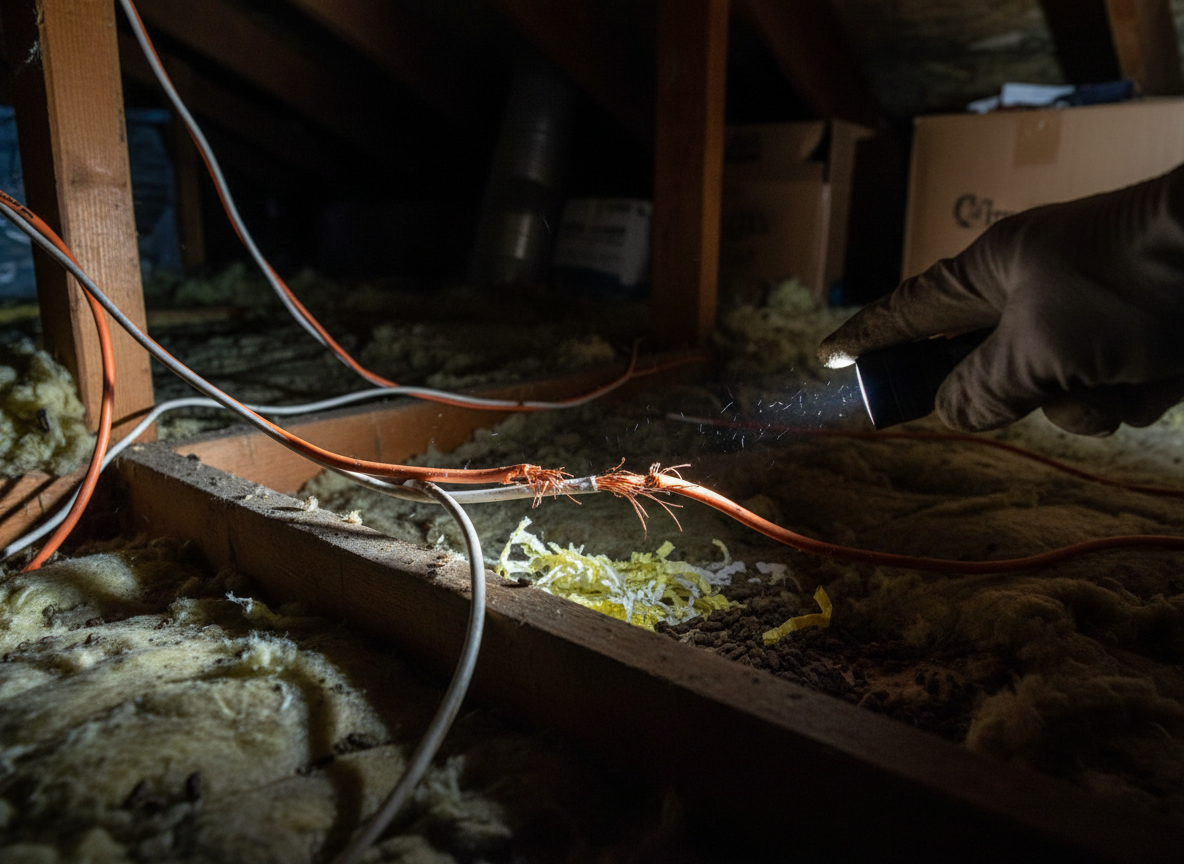
Rodents leave chew marks 1/8–1/4 inch wide, scattered droppings, shredded insulation nests, and exposed copper on NM cable in La Pine attics; flickering lights or unexplained breaker trips often follow. Mice and voles gnaw the plastic jacket to keep their teeth worn, especially once high-desert nights drop below freezing and they seek the warmth of a roof cavity. In Downtown La Pine and along the Little Deschutes River corridor, older ranch houses and manufactured homes from the 1970s–1990s typically have unsealed soffit vents and kraft-faced insulation that rodents treat as both highway and nesting material. You can often confirm damage without tearing everything apart by looking for those specific signs plus a faint ammonia odor and small entry holes at the eaves.
Visual Clues You Can See From The Hatch
Stand on a stable ladder and shine a bright LED flashlight across the joists before you even crawl in. Look first for dark grease streaks along the top plates where rodents repeatedly travel; the oil from their fur leaves a shiny path that dust never quite covers. Next scan for rice-sized droppings clustered near electrical boxes or along the ridge beam—fresh pellets are dark and moist, older ones gray and crumbly. Shredded fiberglass or cellulose piled into a loose nest the size of a softball is another giveaway, often tucked against a warm chimney chase or water heater flue. Chewed cable jackets appear as parallel grooves that expose bright copper; if the nicks are recent the metal still shines, older damage oxidizes to a dull brown. In homes near La Pine State Park the same pattern shows up because pine-needle debris and open crawl spaces give rodents easy access from the forest floor. Never ignore a single frayed conductor—mice rarely stop at one bite.
Why Cold Winters Push Rodents Into Attics Here
Deschutes County’s high desert swings from warm, dry summers to nights that regularly hit the teens, so rodents that nested under decks all summer suddenly need a heated cavity. Attics over electric-heat homes stay 10–15 degrees warmer than the outdoors, making them prime real estate once the first hard freeze arrives. Manufactured homes common around Sunriver and La Pine often have thin belly-board and unscreened gable vents that mice squeeze through in seconds. Older stick-built cabins along the Little Deschutes River frequently have gaps where the roof meets the log walls, and those gaps widen as the wood dries in summer then contracts in winter. Once inside, rodents chew whatever they can reach—Romex, speaker wire, even the plastic on recessed-light cans. The same temperature drop that drives them indoors also makes brittle insulation crack, so you may hear scratching at night that you never noticed in July. If lights flicker only after a cold snap, suspect chewed conductors rather than a failing circuit breaker.
Safe Steps To Confirm Damage Without Getting Bit
Turn off the main breaker and wait 5 minutes so any residual charge drains. Wear a dust mask, gloves, and long sleeves; attic insulation in 1980s La Pine homes often contains loose fiberglass that irritates skin. Move slowly on the joists—never step on the drywall—and keep a second person at the hatch in case you need to back out. Photograph every chewed section with your phone so you can show an electrician later; include a coin in the frame for scale. Check junction boxes for droppings inside the cover and look for teeth marks on the plastic knockouts. If you smell a strong ammonia odor or see live droppings, leave immediately and schedule a professional electrical inspection rather than continuing. Homes in Downtown La Pine built before 1990 often have knob-and-tube remnants mixed with later Romex, so a chewed modern cable can still energize an old ungrounded circuit. Never attempt to tape or splice anything yourself—exposed copper in an attic is a fire starter.
What The Damage Looks Like On The Wire Itself
Healthy NM-B cable has a smooth, slightly glossy jacket; rodent damage leaves a series of crescent-shaped bites that look like someone took a tiny hole punch to the plastic. The copper inside may be nicked or completely severed; a nicked conductor still carries current but overheats at the weak point. You may also find the ground wire (bare copper) chewed down to a thin strand while the hot and neutral remain intact—mice prefer the softer metal. In some attics the rodents drag the cable several inches out of its staple, leaving a loop that can chafe against a nail. If the jacket is gone for more than 2 inches, the entire run usually needs replacement rather than a simple splice. Frequent trips that started after you heard scratching often trace back to this exact spot; see our related post on what causes frequent breaker trips in rural Oregon homes for the electrical side of the same problem. A whole-house surge protector will not save a chewed conductor, so address the physical damage first.
After You Spot The Chews: Practical Next Moves
Seal obvious entry points with 1/4-inch hardware cloth and steel wool, then schedule a licensed electrician who can open the walls if needed. Most chewed attic runs in La Pine require 20–40 feet of new 12/2 or 14/2 NM cable plus a new staple every 4.5 feet; the work typically takes 2–4 hours once access is clear. If multiple circuits are involved, a partial home rewiring of the attic may be safer than patching each bite. Keep the attic hatch closed and consider a motion-sensor light so you can check for new activity without climbing in every week. La Pine Electrician Pros works Monday–Friday 8am–6pm and Saturday 9am–2pm from 15682 Sunrise Ridge Blvd; we can walk you through photos you already took and tell you whether the damage is an emergency or can wait until the next business day. Do not wait for sparks—once copper is exposed the next nest can start a fire that spreads through dry pine-needle insulation in minutes.