
2026-08-29 ·
What Causes Frequent Breaker Trips In Rural Oregon Homes
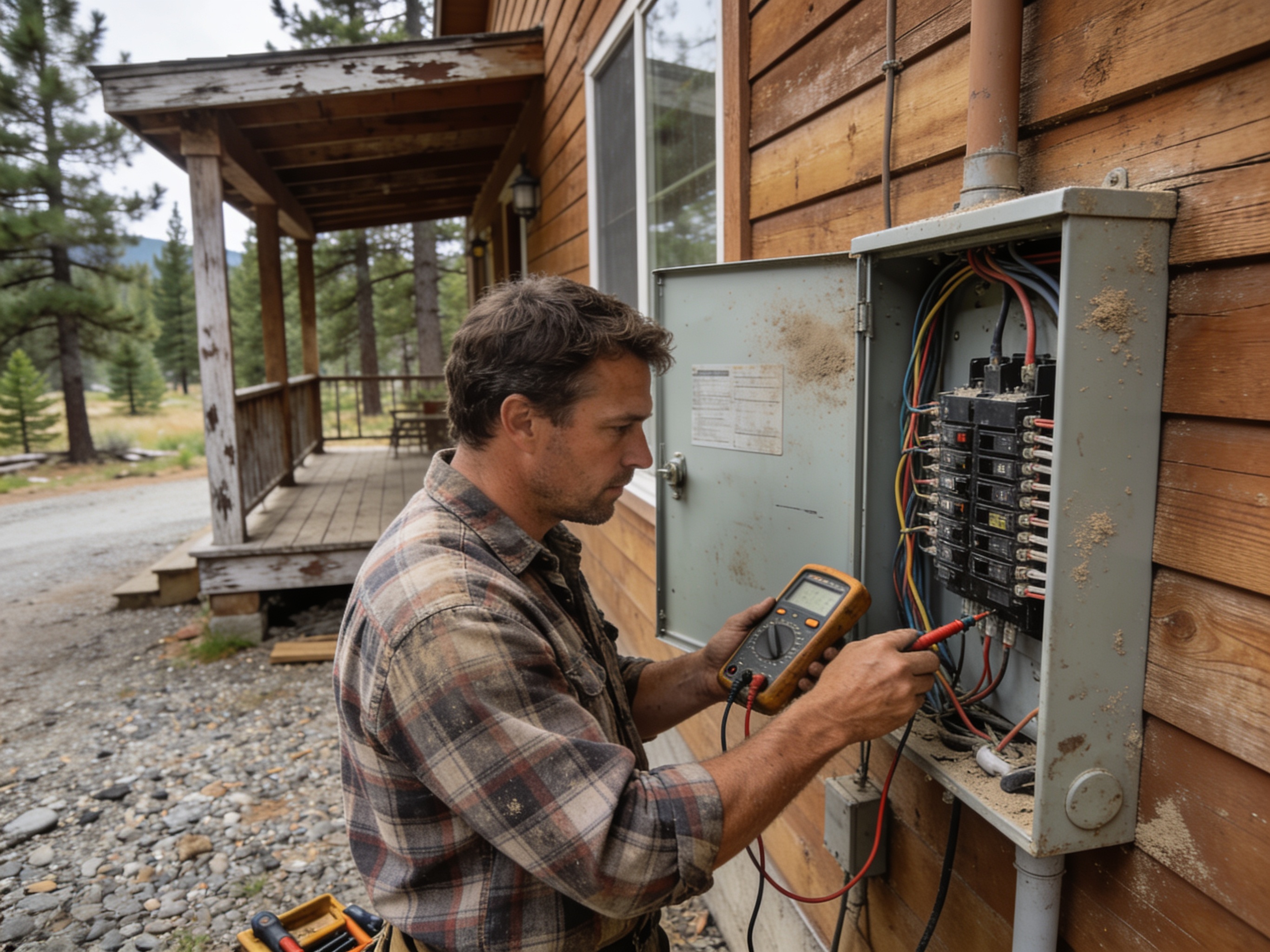
Frequent breaker trips in rural Oregon homes are most often caused by overloaded branch circuits, undersized or aging panels, moisture from freeze-thaw cycles, and failing motors on well pumps or heaters. In Deschutes County properties around La Pine, many houses still run 60-amp or 100-amp services built for far lighter loads than today’s heat pumps, shop tools, and kitchen appliances. A single 15-amp circuit that keeps tripping is usually trying to carry more than 1,440 watts of continuous load. Homes near Downtown La Pine, cabins by the Little Deschutes River, and places toward Sunriver and Bend share the same pattern: original wiring never planned for modern draw.
Overloaded Circuits In Older Rural Homes
A large share of La Pine housing stock began as modest cabins or ranch houses with 14-gauge wire on 15-amp breakers serving whole wings. That layout was fine when the load was lights and a fridge. Add a microwave, space heater, and shop compressor on the same run and the breaker does its job by opening. High-desert summers push window units and evaporative coolers; winters send electric baseboards and portable heaters onto the same circuits. Many owners in Downtown La Pine daisy-chain extension cords through garages and outbuildings, which adds resistance and heat. Kitchen and bathroom remodels often keep the original 20-amp feed even after installing 1,500-watt appliances. If the same breaker trips only when two devices run together, the circuit is simply too small. Spreading loads, adding dedicated circuits, or a electrical panel upgrade is the lasting fix rather than resetting the handle every evening. Watch for warm outlet plates and dimming lights as early clues that the wiring is at its limit.
High Desert Weather And Seasonal Loads
La Pine sits in high desert country with cold winters and warm summers, so electrical demand swings hard twice a year. When overnight temperatures drop, heat tape on pipes, block heaters, and extra space heaters all land on already busy circuits. Freeze-thaw around La Pine State Park and the Little Deschutes River drives condensation into outdoor boxes and crawl-space junctions; that moisture raises leakage current until a GFCI or AFCI trips. Summer irrigation pumps and well motors start under high head pressure after dry spells, drawing 2–3 times running amps for a few seconds and nuisance-tripping older breakers. Dust and pine pollen work into outdoor disconnects, raising contact resistance. Properties between La Pine and Sunriver see the same pattern after wind events that drop needles onto service drops. Seasonal load spikes do not mean the breaker is “weak”; they mean the circuit was never sized for simultaneous heat, pump, and lighting use. Mapping which devices share a breaker before the next cold snap prevents most winter trips.
Worn Breakers, Panels, And Hidden Faults
Breakers themselves wear out. After 20–30 years of cycling, the internal spring and contacts weaken, so they trip below the labeled 15 or 20 amps. Federal Pacific, Zinsco, and some early Square D panels common in older Deschutes County homes are known for this. Rodents in crawl spaces chew insulation, creating intermittent shorts that only appear when the house settles or a branch sways. Well-pump capacitors fail and the motor stalls, pulling locked-rotor current until the breaker opens. Loose aluminum connections at the panel bus heat under load and trip nearby breakers even when the circuit itself is fine. If trips happen with nothing extra plugged in, the fault is likely in the wiring or the breaker, not the appliance. An electrical troubleshooting visit that includes infrared on the panel and a clamp-meter load test usually finds the weak point in one visit. Recurring trips on the same handle after a reset are a sign the device needs circuit breaker repair or replacement, not another reset.
Moisture, Snow, And Outdoor Circuits
Snowmelt and ice dams around eaves drive water into outdoor receptacles and landscape lighting transformers. After heavy snowfall, GFCI devices on garage, deck, and well-house circuits trip because wet soil raises ground-fault current. That is why outlets often fail after storms; the related pattern is covered in why outlets stop working after heavy snowfall. Unsealed conduit from the meter to the house collects condensation that freezes, then thaws into the panel. Homes closer to the river see higher humidity in crawl spaces, which ages NM cable jackets faster. Using indoor-rated boxes outdoors or skipping drip loops on service laterals makes these trips worse. A whole-house surge event from a summer thunderstorm can also weaken breaker internals so they trip later under normal load. Sealing, proper outdoor ratings, and AFCI/GFCI devices that are still within their 10-year test window cut most weather-related trips. If trips cluster after storms, inspect the service drop and outdoor GFCIs first.
When Frequent Trips Mean The Wiring Needs Work
If the same breaker trips more than a few times a month, treat it as a diagnosis, not a nuisance. Start by listing every device on that circuit and adding their wattages; anything over 80 percent of the breaker rating (1,440 watts on 15 amps, 1,920 on 20 amps) is overload. Next, unplug everything and reset; if it still trips, the fault is in the cable or the breaker. Flickering lights, buzzing at the panel, or a burning smell mean stop using that circuit and call for help. Many La Pine homes that show these signs also need broader updates; see signs your La Pine home wiring needs updating. Owner-operated work from 15682 Sunrise Ridge Blvd, La Pine, OR 97739, with hours Mon–Fri 8am–6pm and Sat 9am–2pm, can inspect the panel, measure actual loads, and recommend dedicated circuits or a service upgrade without guesswork. Frequent trips are the house telling you the original rural wiring has reached its limit. Addressing the cause once is safer and cheaper than living with a breaker that no longer protects the circuit.