
2026-08-29 ·
Preventing Ice Dams From Damaging Roof Electrical Lines
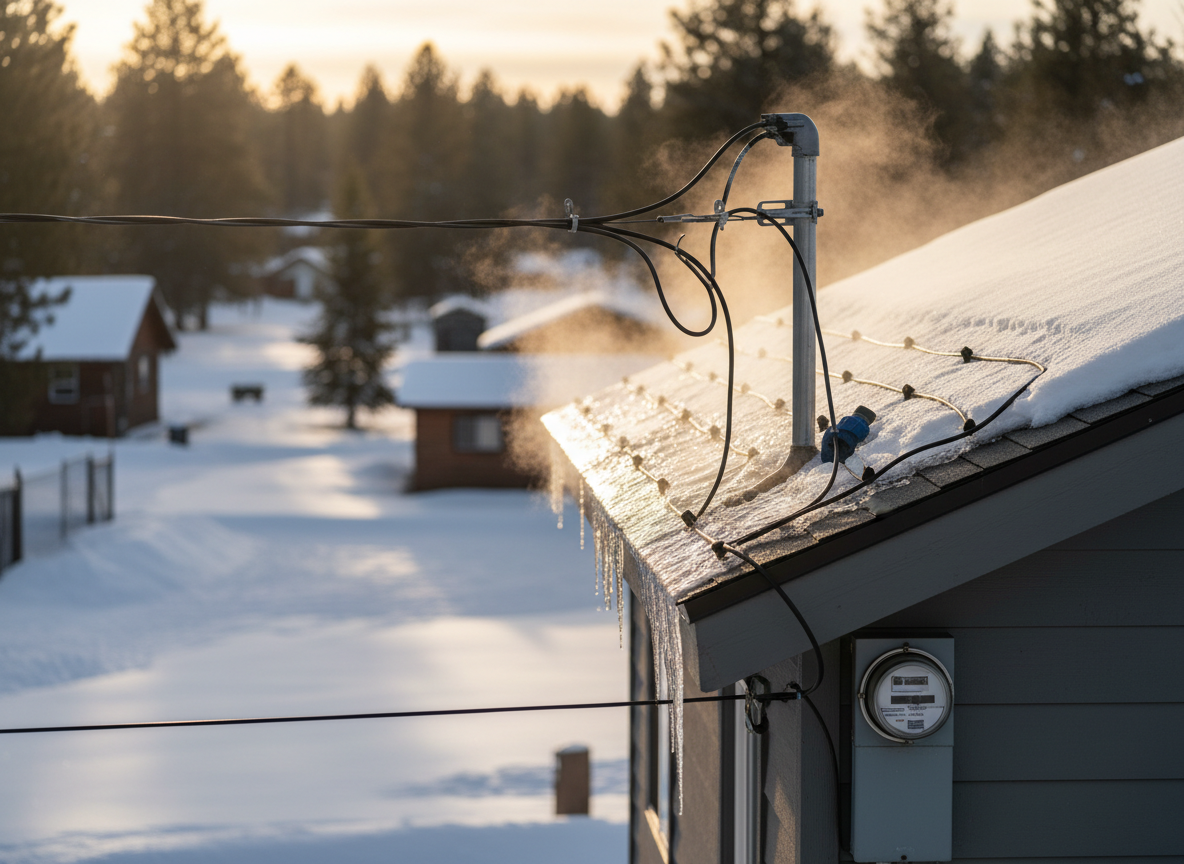
Ice dams damage roof electrical lines when meltwater backs up under shingles and soaks attic wiring or junction boxes at the eaves, often leading to shorts, corrosion, or fire risk within a single freeze-thaw cycle in La Pine’s high-desert winters. Prevention starts with sealing heat leaks so the roof deck stays cold, then adding ventilation and, only if needed, properly rated heat cable—steps that protect lines serving Downtown La Pine cabins and manufactured homes alike. Once winter temperatures drop, packed snow on low-pitch roofs along the Little Deschutes River melts from attic warmth, runs to the cold eave, and freezes into a dam that forces water inward. That water finds NM cable, outdoor-rated runs to soffit lights, and any unsealed boxes before it ever shows as a stain on the ceiling.
How Ice Dams Form on La Pine Roofs
High-desert snow in Deschutes County is dry at first but still packs on north-facing slopes and around La Pine State Park. Warm air leaking from living space into the attic melts the underside of that pack. Water slides to the unheated overhang, refreezes, and builds a ridge. Behind the ridge, more melt has nowhere to go except under the shingles and into the roof cavity. Older manufactured homes common here often have thin attic insulation and unbaffled soffit vents, so the melt line sits right above the eave wiring. Terrain near the river stays colder longer, so the dam lasts days instead of hours. A 4–6 inch snow load plus a 20-degree swing overnight is enough to start the cycle. The same pattern hits Sunriver and Bend outskirts, but La Pine’s lower elevation and open pine canopy let more sun hit south roofs while north eaves stay frozen—uneven melt that concentrates water at the coldest electrical runs.
Why Roof Electrical Lines Are at Risk
Eave and attic wiring sits exactly where ice-dam water first enters. Junction boxes for outdoor lighting and security fixtures are often mounted in soffits or on fascia. Water follows the cable jacket into the box, corrodes connections, and trips breakers or, worse, leaves a live fault. In older stock, original NM-B was never meant for repeated wetting; once the paper wrapping saturates, insulation resistance drops and arcing can start inside the wall. Heat-trace cable itself becomes a hazard if it is stapled through shingles or left un-GFCI-protected—another common shortcut on cabins built before current code. Ice weight can also pull down service masts or stretch drip loops until they contact the dam. Homes that already show frequent breaker trips after storms are usually leaking at the roof first. A soaked attic run can take 2–5 years of freeze-thaw before it fails openly, so the damage is already inside the walls by the time lights flicker.
Insulation, Ventilation, and Heat-Cable Rules That Work Here
Keep the roof deck within a few degrees of outside air. That means R-49 or better over the living space, sealed can lights, and baffles that keep soffit air moving all the way to the ridge. In La Pine’s dry cold, 1–2 inches of extra cellulose over existing batts often stops the melt line without a full tear-out. Ridge vents must stay clear of pine needles; clogged vents reverse the airflow and dump heat at the eaves. Heat cable is a last resort, not a first fix. Use only roof-rated, GFCI-protected cable laid in a zigzag at the eave, never under shingles or through the attic. Run it on a dedicated 20-amp circuit so it cannot overload the lighting run it is supposed to protect. Never leave it on 24 hours; a thermostat or timer that kicks in below 32°F is enough. After any ice event, schedule an electrical inspection of attic boxes and soffit fixtures before the next storm. Owner-operated crews based at 15682 Sunrise Ridge Blvd work Mon–Fri 8am–6pm and Sat 9am–2pm and can pull a camera into the eave without tearing the roof.
Seasonal Checks and When to Call for Help
Walk the attic in October while it is still dry. Look for frost on the underside of the roof deck—that is heat leaking. Check that bathroom and kitchen fans dump outside, not into the attic. Clear gutters and downspouts so melt has a path off the roof; ice dams grow fastest where water sits. After the first heavy snow, look from the ground for icicles thicker than 1 inch or a dark wet line at the eave—both mean water is already behind the dam. If lights flicker, GFCIs trip, or you smell damp insulation, treat it as an emergency. Water and 120-volt wiring do not wait for Monday. Emergency electrical repair can isolate the wet circuit, dry the boxes, and replace damaged cable before corrosion spreads. Manufactured homes from the 1970s–90s in this county often need the same attic sealing plus a panel check; see the related notes on older La Pine manufactured homes. Do the insulation and vent work once, then the winter checks become a 15-minute walk instead of a roof tear-off. That is how you keep ice dams from ever reaching the wires.