
2026-08-29 ·
Tips For Maintaining Backup Battery Systems In La Pine
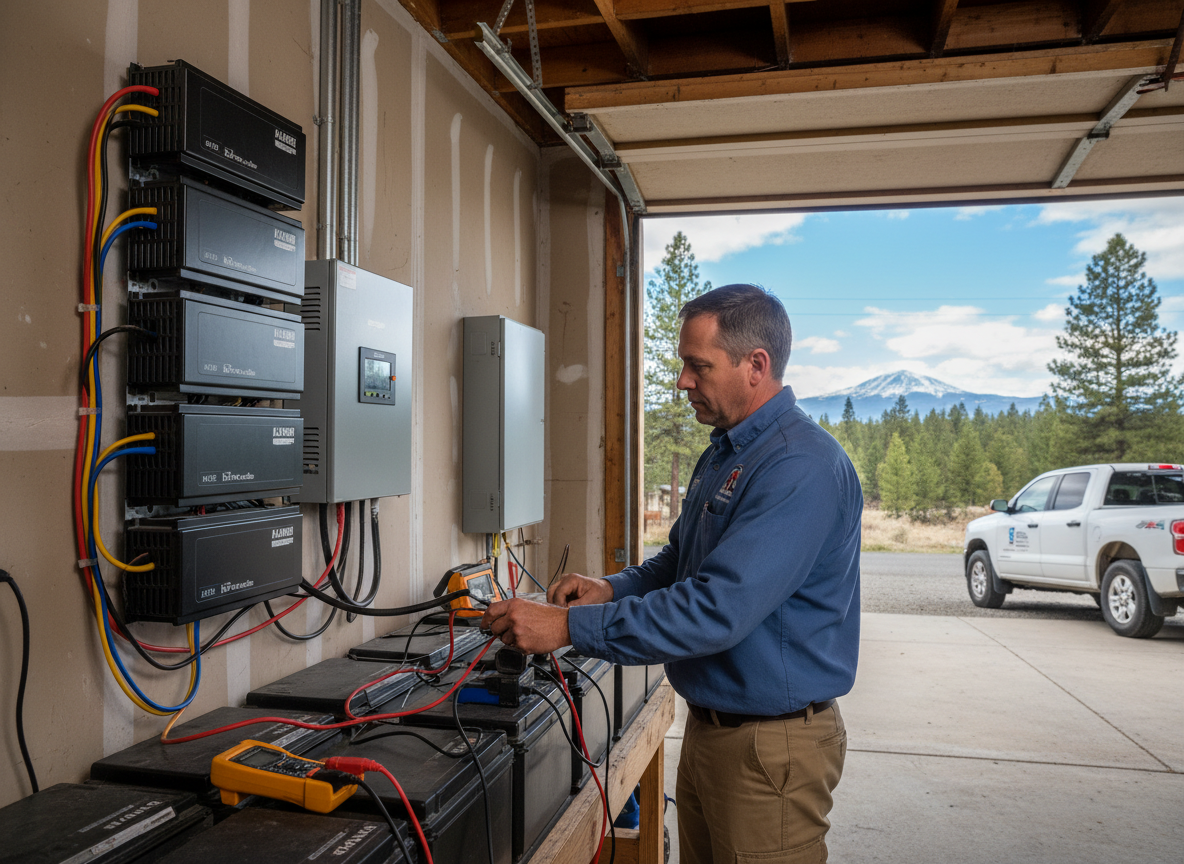
In La Pine, backup battery systems stay reliable when you inspect terminals every 30 days, keep flooded lead-acid banks equalized every 6 months, and test under load every 90 days. High-desert nights routinely drop available capacity 20–50% on lead-acid cells once temperatures fall, so those intervals matter more here than in milder valleys. Lithium packs fare better in the cold but still need firmware checks and a dry, ventilated spot away from wood-stove heat. The goal is simple: catch corrosion, sulfation, and weak cells before an outage hits Downtown La Pine or a cabin near the Little Deschutes River.
Why High-Desert Cold And Dry Air Change The Job
La Pine sits in Deschutes County’s high desert, with long cold winters and warm, dry summers that punish batteries in opposite ways. Overnight lows pull electrolyte density down and slow chemical reactions; a bank that reads 12.6 V at 70°F can sag below 12.2 V at 20°F even when fully charged. Dry air also speeds terminal oxidation, especially on older manufactured homes and 1970s–1990s cabins that still use flooded cells in unheated garages or crawl spaces. Sandy, well-drained soil around La Pine State Park means less flooding risk, but it also means more dust on vents and less humidity to slow corrosion. Homes closer to Bend or Sunriver often have better insulation, yet the same temperature swings still hit any battery left in an unconditioned space. Keep the bank off concrete if you can; a simple wood pallet or rubber mat cuts conductive heat loss. If the system ties into a generator, verify the charger’s float voltage still matches the battery chemistry after a cold snap—many older chargers overcharge in summer and undercharge in winter.
Monthly Terminal And Voltage Checks That Catch Trouble Early
Start with a visual pass: look for white or green crust on posts, cracked cases, and low electrolyte in flooded cells. Tighten connections to the manufacturer’s inch-pound spec—loose lugs heat under load and can trip breakers or damage inverters. Measure resting voltage after the bank has sat unused for 4–6 hours; anything under 12.4 V on a 12 V lead-acid string needs charging before the next outage. For lithium, confirm the BMS reports cell balance within 0.05 V. Wipe terminals with a baking-soda paste if corrosion appears, then coat with a thin dielectric grease. In Downtown La Pine, many panels sit in unheated utility rooms, so condensation from warm summer days followed by cold nights can leave moisture that accelerates rust. If you see frequent trips when the battery inverter kicks in, that often points to a weak cell or undersized wiring rather than the breaker itself; our electrical troubleshooting page covers how those symptoms overlap. Log the readings—three months of declining voltage is a clearer signal than one snapshot.
Seasonal Routines For Winter Capacity And Summer Heat
Before the first hard freeze, bring portable UPS units indoors or add a small battery warmer rated for the chemistry you own. Flooded cells benefit from a controlled equalization charge once the nights stay below 40°F; skip this on sealed AGM or lithium. In summer, shade the enclosure and confirm ventilation—high-desert sun can push a garage past 90°F and cook electrolyte. Test the system under a real load: run the well pump, furnace blower, or fridge for 15–20 minutes and watch voltage sag. A healthy 48 V bank should stay above 46 V under that draw. If the bank supports a generator, schedule the backup generator hookup inspection so transfer-switch timing and charger output still match after seasonal temperature swings. Homes along the Little Deschutes often see extra humidity near the river; extra venting or a small dehumidifier in the battery closet pays off. Replace any battery that has dropped below 80% of rated capacity; most lead-acid packs in this climate last 4–7 years, lithium 8–12 years when kept in the 50–80°F window.
When DIY Stops And A Licensed Electrician Should Step In
Call for help if you smell sulfur, see a swollen case, or measure more than 0.2 V difference between cells in a series string. Those signs mean internal damage that a homeowner charger cannot reverse. Also stop if the inverter throws persistent low-voltage alarms after a full charge cycle—the issue may be a failing charger, undersized conductors, or a panel that needs an electrical inspection before more load is added. We work Monday–Friday 8am–6pm and Saturday 9am–2pm from 15682 Sunrise Ridge Blvd; after-hours outages still get a callback the next business morning. Readers who keep seeing unexplained trips after battery work often find the root in older wiring, covered in What Causes Frequent Breaker Trips In Rural Oregon Homes. Keep a written log of dates, voltages, and any equalization cycles; that record lets the next technician skip guesswork and go straight to the weak cell or charger fault. Regular, documented care is what keeps backup power ready when La Pine’s next cold snap or summer storm knocks the grid down.