
2026-08-29 ·
How Local Weather Affects Outdoor Electrical Boxes In La Pine
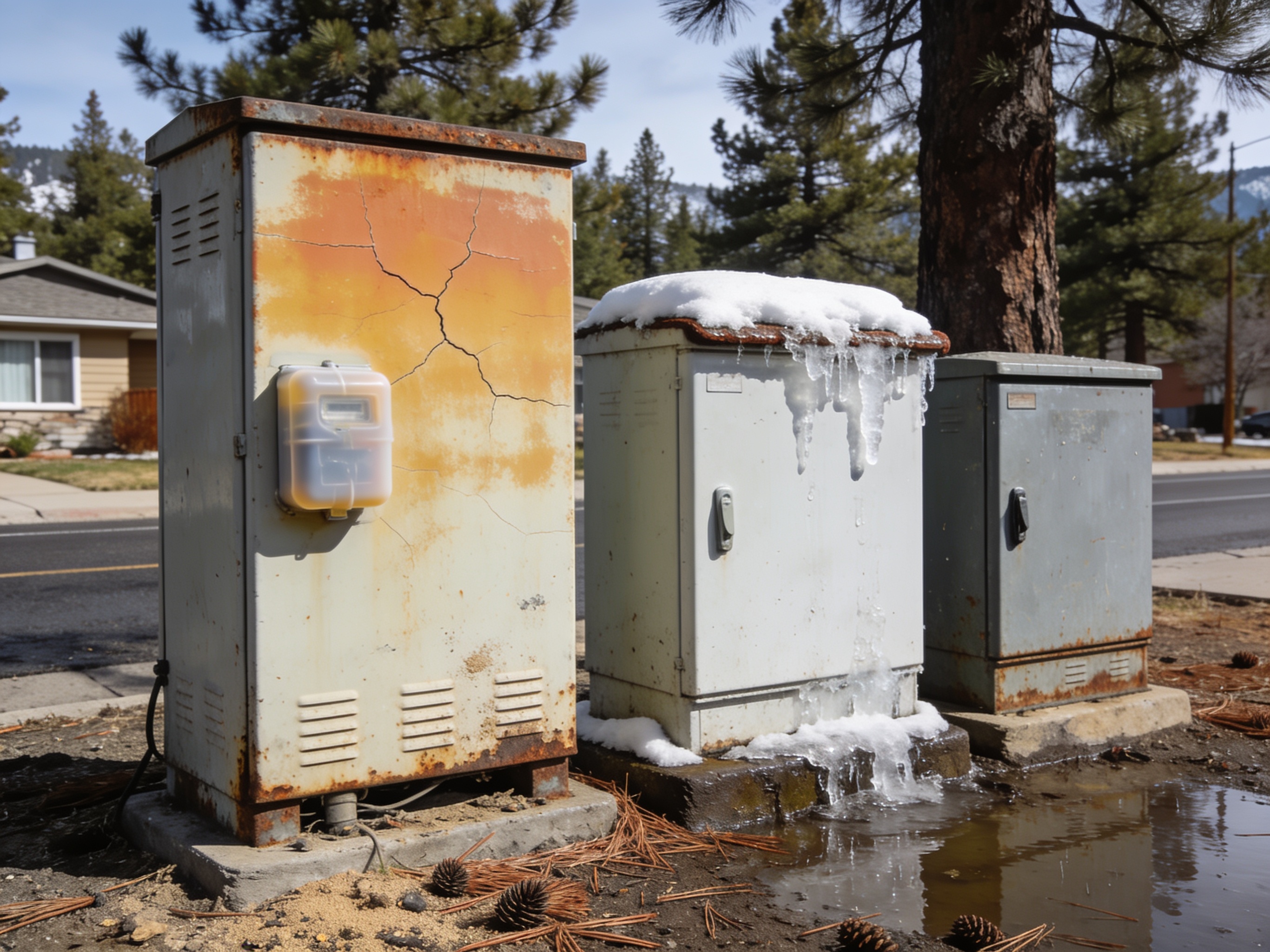
In La Pine’s high desert, outdoor electrical boxes typically last 8–15 years before weather-driven failures become likely, with freeze-thaw in winter and intense summer UV causing most gasket, cover, and conductor damage. Cold nights after wet snow around Downtown La Pine and along the Little Deschutes River pull moisture into NEMA enclosures; then daytime thaw expands ice and cracks cheap plastic. Warm, dry summers bake the same lids, fade labels, and let volcanic dust grind seals. That combination—not a single storm—is why boxes on older ranch houses and cabins in Deschutes County fail sooner than indoor gear.
Freeze-Thaw Cycles And Condensation In Winter
Once winter temperatures drop, overnight lows routinely sit well below freezing while daytime sun on south walls can thaw snow on lids. Water that sneaks past a tired gasket or a missing knockout plug freezes, expands, and pries the cover. Condensation is worse on metal boxes mounted on uninsulated sheds: the enclosure is colder than the air, so interior surfaces sweat. That moisture corrodes terminals, trips GFCIs, and can arc when a circuit is loaded. Homes near La Pine State Park and the river see more drifting snow against low-mounted boxes; wind-packed drifts hold wet snow against the bottom seam for days. Typical housing stock here includes 1970s–1990s stick-built and manufactured homes with original outdoor receptacles that were never upgraded to weather-resistant types. A cracked cover that still “clicks shut” is not weathertight. After a thaw, look for white oxidation on screws, rust streaks, and ice inside the box. If a well pump or landscape circuit lives in that enclosure, a winter outage can follow—see what to do when your well pump loses power in winter. Do not run a heater or hair dryer into a live box; de-energize first and dry with the cover off in a shop.
Summer Heat, UV, And Dust On Junction Boxes
Warm summers in Deschutes County bring strong UV and fine pumice dust that works into every gap. Plastic boxes that were never UV-stabilized become brittle in 5–10 years; lids snap at the hinge when you open them for a simple lamp swap. Dust mixed with pollen forms an abrasive paste that scores gasket faces, so the next rain or snowmelt enters easily. Metal boxes fare better against sun but still heat-soak: interior temperatures can sit 20–40°F above ambient on a dark-painted enclosure, accelerating insulation aging on THHN in the last few inches. Properties between Downtown La Pine and Sunriver often have landscape lighting and RV pedestals on the same outdoor circuit; those extra connections mean more knockouts and more leak paths. If you add outdoor lighting installation, specify in-use covers (the bubble type that stays closed with a cord plugged in) and WR-rated receptacles. Check labels: faded “WR” or missing NEMA type markings usually mean the cover has already lost its listing. Dust also hides loose connections until a windstorm or a load spike shows heat discoloration. After a dry, windy week, wipe the exterior and listen for buzzing at the cover—that is often a loose lug, not “just the wind.”
Moisture, Soil, And Terrain Around The Little Deschutes
The Little Deschutes River corridor and low spots near La Pine State Park hold more humidity than the open high desert, even in a dry climate. Boxes mounted on posts in sandy volcanic soil can settle; a slight tilt lets water pool on the lid instead of shedding. Frost heave in winter lifts posts 1–2 inches, stressing conduit entries and pulling weatherheads out of alignment. Soil is generally well-draining, so standing water is less common than in the Willamette Valley, but snowmelt still finds every unsealed KO. Cabins and older homes in Downtown La Pine often have original rigid or thin-wall conduit with no expansion fittings; temperature swings of 40–70°F in a single day make that pipe work against the box. If you see green corrosion at a ground screw or a white crust on aluminum lugs, moisture has already been inside. Do not caulk the entire lid shut—that traps condensation. Use listed foam gaskets, drip loops on cords, and a slight downward pitch on conduit. After a windstorm, walk the property the same day; blown limbs and ice can crack covers that looked fine in October. Pair that walk with inspecting electrical systems after a La Pine windstorm so you catch both overhead and enclosure damage.
What To Inspect And When To Call For Help
Twice a year—late fall before the first hard freeze and late spring after melt—open every outdoor box with the circuit off. Look for cracked gaskets, missing KO seals, rust, insect nests, and any cover that no longer seats flush. Tighten lugs to spec if you are qualified; otherwise note heat discoloration and call for electrical troubleshooting. Replace non-WR receptacles and non-in-use covers; those two upgrades cut most water-related trips. Lifespan of a quality metallic enclosure with a listed gasket is often 12–20 years here if it stays out of standing snow; cheap plastic may need replacement at 8 years. Hours for scheduled work are Mon–Fri 8am–6pm and Sat 9am–2pm from 15682 Sunrise Ridge Blvd in La Pine. Emergency after-hours issues—smoking covers, burning smell, or a dead well circuit in a freeze—need same-day attention, not a weekend DIY. Keep vegetation 12 inches off boxes so snow and irrigation do not sit against the lid. If you are adding a generator or EV circuit later, plan the outdoor disconnect so it is not the lowest point on the wall. Honest workmanship you can inspect beats a cover that looks new but leaks at the first thaw.