2026-08-29 ·
How Wildfire Season Affects Electrical System Maintenance
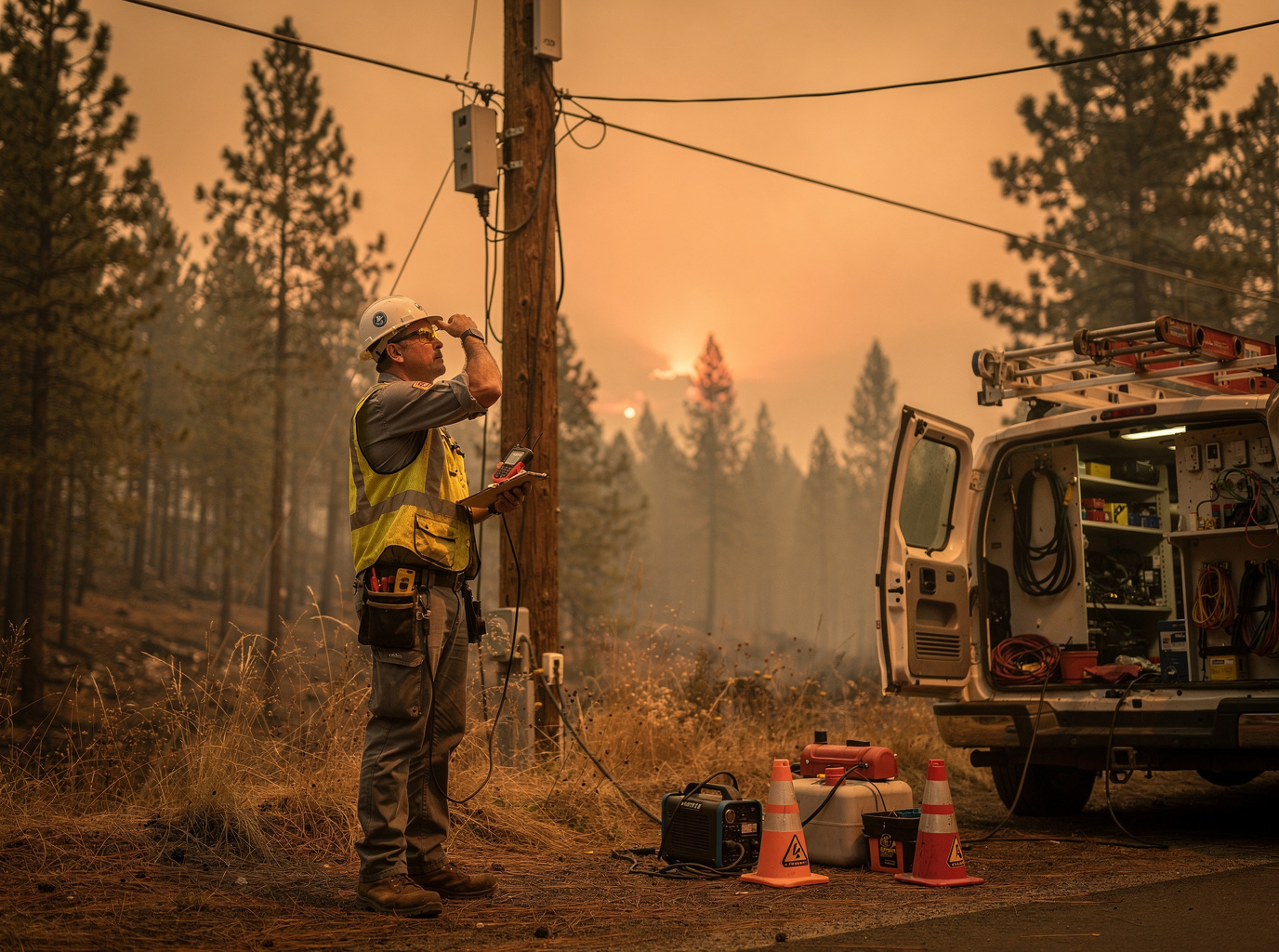
Wildfire season in La Pine typically calls for electrical system maintenance every 4–8 weeks from July through September, plus a focused check after any nearby fire or public safety power shutoff. High-desert heat, wind-driven ash, and dry air around Downtown La Pine, La Pine State Park, and the Little Deschutes River load outdoor gear, panels, and surge devices harder than winter cold. Homes in Deschutes County—many older cabins and ranch houses with mixed overhead and underground service—need extra attention to weatherheads, meter bases, and GFCI/AFCI devices before smoke settles in.
Smoke, Ash, and Fine Dust on Outdoor Gear
Ash from fires west of Bend and Sunriver is fine, conductive when damp, and it coats meter cans, disconnects, and landscape lighting. On properties near the Little Deschutes River and pine stands, afternoon winds push that dust into louvered panels and photocells. A light rinse and visual check every 4–6 weeks in peak season is more useful than waiting for a failure. Look for gray film on lugs, sticky breakers, and outdoor receptacles that trip more often. Do not pressure-wash live equipment; de-energize first or call for a walkthrough. Electrical inspection after a heavy smoke week often finds corroded ground rods and filled conduit bodies that winter never revealed. Downtown La Pine lots with older overhead drops collect more debris at the weatherhead than newer underground feeds toward Sunriver.
Heat, Dry Air, and Insulation Stress
Warm summers in this high desert push attic and garage temperatures well above outdoor readings. Thermoplastic insulation on older branch circuits becomes brittle faster when day-after-day heat follows a dry spring. Panels in unconditioned shops can run hot enough that breakers nuisance-trip under modest loads—well pumps, window ACs, and shop tools. That is different from winter, when condensation and freeze-thaw around foundations are the main enemies. If you still have a fuse box or a 100-amp panel feeding additions, heat plus extra seasonal loads is a reason to plan an electrical panel upgrade before the next fire year, not during an outage. Concrete-block and stick-built homes along Sunrise Ridge Blvd see the same pattern: dry air plus dust equals more tracking on dirty insulators.
Power Shutoffs and Generator Readiness
Utilities serving Deschutes County may de-energize lines when winds and fire risk spike. That is when transfer switches, inlet boxes, and backup gear get their real test. A generator that sat all winter needs oil, load tests, and a look at the interlock before you rely on it. Battery backups for well pumps and sump systems should be cycled; see our notes on maintaining backup battery systems in La Pine. Whole-house surge protection matters more after restoration, because switching transients and nearby lightning on dry soils can hit electronics. If you add a whole house surge protector, install it at the service, not only at strips. Underground laterals—common toward Sunriver—still need a post-event check at the meter and transformer pad; more on that in what homeowners should know about La Pine underground utilities.
After-Fire and Mid-Season Inspection Priorities
After smoke or a nearby burn, walk the service: weatherhead, drip loops, meter enclosure, and any solar or generator disconnects. Smell for hot insulation, listen for buzzing, and note breakers that feel warm. AFCI devices can nuisance-trip on dirty circuits; that is a clue, not always a defective breaker. Outdoor lighting and irrigation clocks fail first because they sit in ash. Homes in Downtown La Pine with mixed ages of wiring benefit from a labeled panel and a written list of what was checked. We work Mon–Fri 8am–6pm and Sat 9am–2pm from 15682 Sunrise Ridge Blvd, La Pine, OR 97739. For after-hours failures, emergency electrical repair is the path when a shutoff left you without heat or a well. Do not reset a breaker that trips twice without finding the load.
Practical Maintenance Window Before and During Season
Schedule the deep work in May–June: torque on service lugs, replace cracked weatherheads, test GFCIs, and confirm grounding. During July–September, keep visits short: ash wipe-down, infrared glance at the panel if you have one, and generator exercise. After the first hard frost, inspect again—ash plus freeze-thaw is a different failure mode. Keep vegetation 10 feet from overhead drops where you can, and never bury extra fill against a meter. That calendar matches how fire, heat, and PSPS actually hit electrical systems here, not a generic checklist. Owner-operated work with upfront quotes beats waiting until the next red-flag day to find a loose lug.