
2026-08-29 ·
Cost Guide For Replacing An Electrical Panel In La Pine
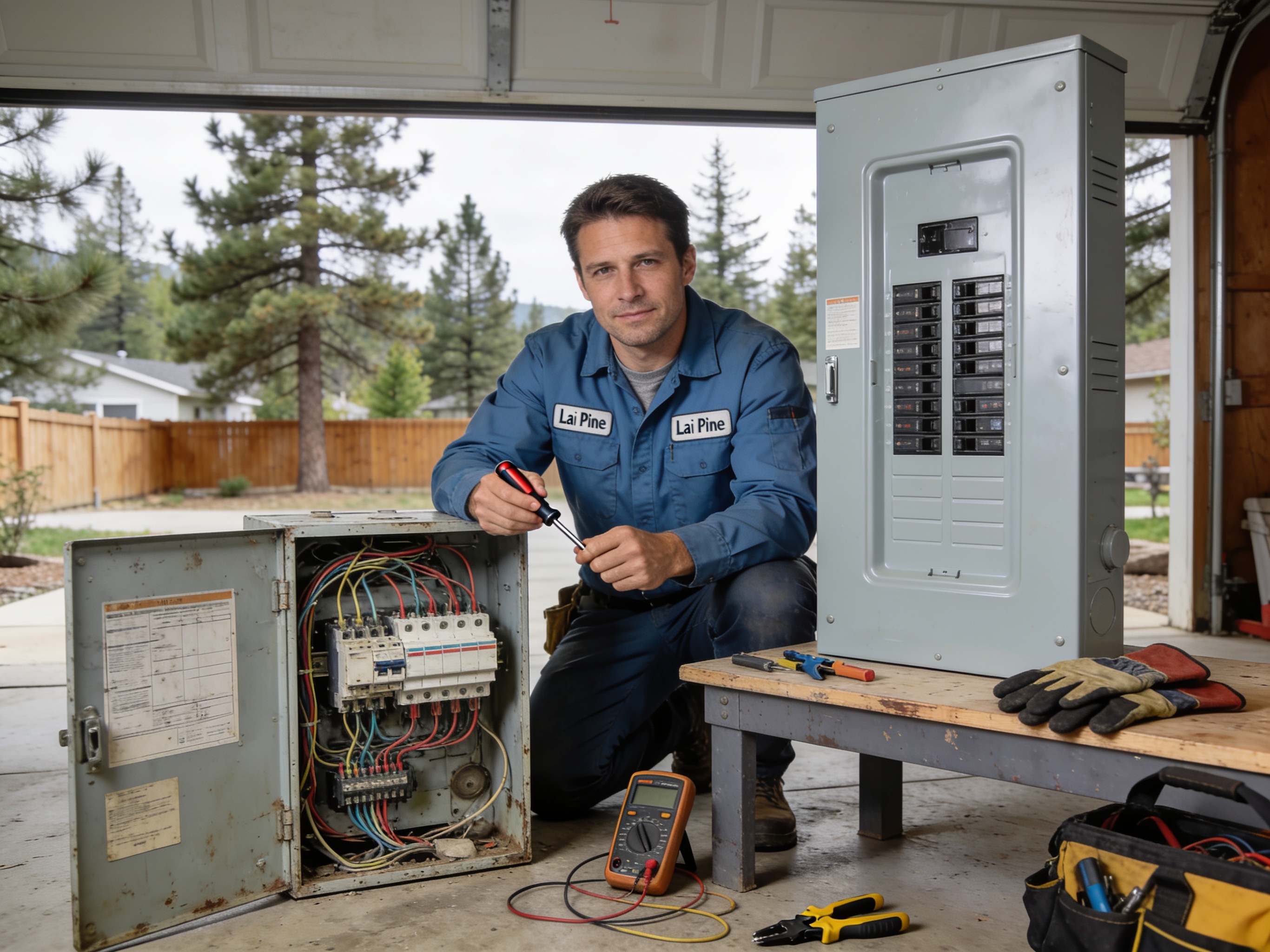
Replacing an electrical panel in La Pine, Oregon typically costs $1,800–$5,500 for a like-for-like 100–200 amp swap, with many Downtown La Pine cabins and ranch houses clustering near $2,200–$3,800 when the existing feeder and grounding can stay. Jumping from a fuse box or 60–100 amp service to 200 amp often lands $3,200–$5,500 because the meter socket, mast, and grounding electrode system usually need work too. Those ranges cover labor, a listed panel, breakers, and a Deschutes County permit—not a whole-house rewire. High desert cold, older log and stick-built stock near the Little Deschutes River, and short winter days all push hours and materials more than a Bend infill job would.
Typical Panel Replacement Costs In La Pine
A straightforward 100 amp to 100 amp change-out on an accessible garage wall in a 1970s–1990s home often prices $1,800–$2,800. Moving to 200 amp with a new meter base and underground or overhead feeder commonly runs $3,000–$4,800. Fuse-box conversions sit at the high end because every circuit must be identified, AFCI/GFCI protection added where code requires it, and old cloth or NM-B often fails inspection. Expect $400–$900 extra if the panel is in a cramped utility closet, snow-blocked crawl, or a shop with no interior access after November. Concrete numbers that stay honest: a 20–24 space 200 amp main-breaker panel, copper lugs, and a handful of tandem or AFCI breakers are the usual hardware; surge devices and generator interlocks are add-ons, not included. Work from 15682 Sunrise Ridge Blvd is scheduled Mon–Fri 8am–6pm and Sat 9am–2pm so winter daylight still covers a one-day swap when the weather holds. Compare that with a fuse box replacement if you still have screw-in fuses.
What Drives Price On Deschutes County Homes
Housing around Downtown La Pine and toward Sunriver is a mix of 1960s–1980s cabins, manufactured homes, and later stick-builts. Many still have 60 or 100 amp services, aluminum branch circuits, or panels with no room for a range, heat pump, or EV. Soil here is sandy volcanic with frost heave; grounding rods and Ufer connections take more time than in wet Willamette Valley clay. Overhead masts ice up; underground laterals can be shallow and need a new trench if the utility requires a larger conductor. Permit and inspection through Deschutes County add a fixed line item—budget $150–$400 depending on service size—not a surprise. If the main disconnect is outside and the interior panel is a sub, you may need two enclosures. Homes near La Pine State Park often have long driveways and no indoor shop space, so a generator or extra lighting circuit is frequently requested in the same visit. An electrical panel upgrade is the right page if you already know you need more amperage rather than a same-size swap.
High Desert Weather And Older Cabin Wiring
Winters drop well below freezing and summers run warm and dry, so panels see condensation, dust, and thermal cycling. That ages bus bars and breaker clips faster than mild-coast climates. Ice on roofs can stress mastheads; see preventing ice dams from damaging roof electrical lines if your service drop is involved. Inside, knob-and-tube is rare, but undersized 14 AWG on 20 amp breakers and missing grounds are common in older Downtown La Pine stock. A panel swap does not magically fix branch wiring. If kitchens or baths still lack GFCI, those circuits should be corrected while the cover is off. Plan 4–10 hours of power-off time for a clean swap; winter jobs start later so interiors are not left dark after 4pm. Warm-season work is faster because trenches and ladders are safer. Nearby Bend and Sunriver jobs sometimes share crews, but La Pine access, well pumps, and wood-stove circuits are local realities that change the punch list. After a purchase, when to call for electrical inspection after buying a La Pine property is the next read.
Permits, Service Size, And Timeline
Deschutes County requires a permit for service equipment changes. The utility (often coordinating from the Bend side) must approve meter-base and disconnect location. A 100 amp panel is enough for a small cabin with gas heat; 200 amp is the default if you want a heat pump, shop welder, or future EV charger installation. Same-day swaps happen when the old panel is surface-mount, labeling is decent, and no feeder upgrade is needed. Two-day jobs are normal when the mast, grounding, or interior subfeed must move. Emergency outages after storms are handled as emergency electrical repair, not a planned panel quote. Ask for a written scope: panel amperage, number of spaces, AFCI/GFCI count, surge option, and whether the meter socket is included. Owner-operated work from Sunrise Ridge Blvd means you can inspect the old panel and the new bus before it is energized. Do not reuse damaged breakers; they are not a savings.
When A Panel Swap Is Not Enough
If branch circuits are overloaded, aluminum, or ungrounded, replacing the panel only moves the weak point. Recurring breaker trips, burning smells, or lights that dim when the well starts mean troubleshooting first. A whole-house home rewiring is a different budget—often $8,000–$20,000+ depending on square footage—and should not be confused with a $1,800–$5,500 panel job. Manufactured homes may need a listed meter-main and bonding of the frame. Properties along the Little Deschutes floodplain sometimes have damp crawl spaces; keep the new enclosure elevated and use listed wet-location fittings outdoors. Get an upfront quote that lists labor, gear, permit, and utility coordination. If the house is in Downtown La Pine, access and parking are usually easier than forested lots west of town. After the swap, label every circuit in plain language so the next winter outage is faster to diagnose.