
2026-08-29 ·
Electric Vehicle Charger Installation Considerations In La Pine
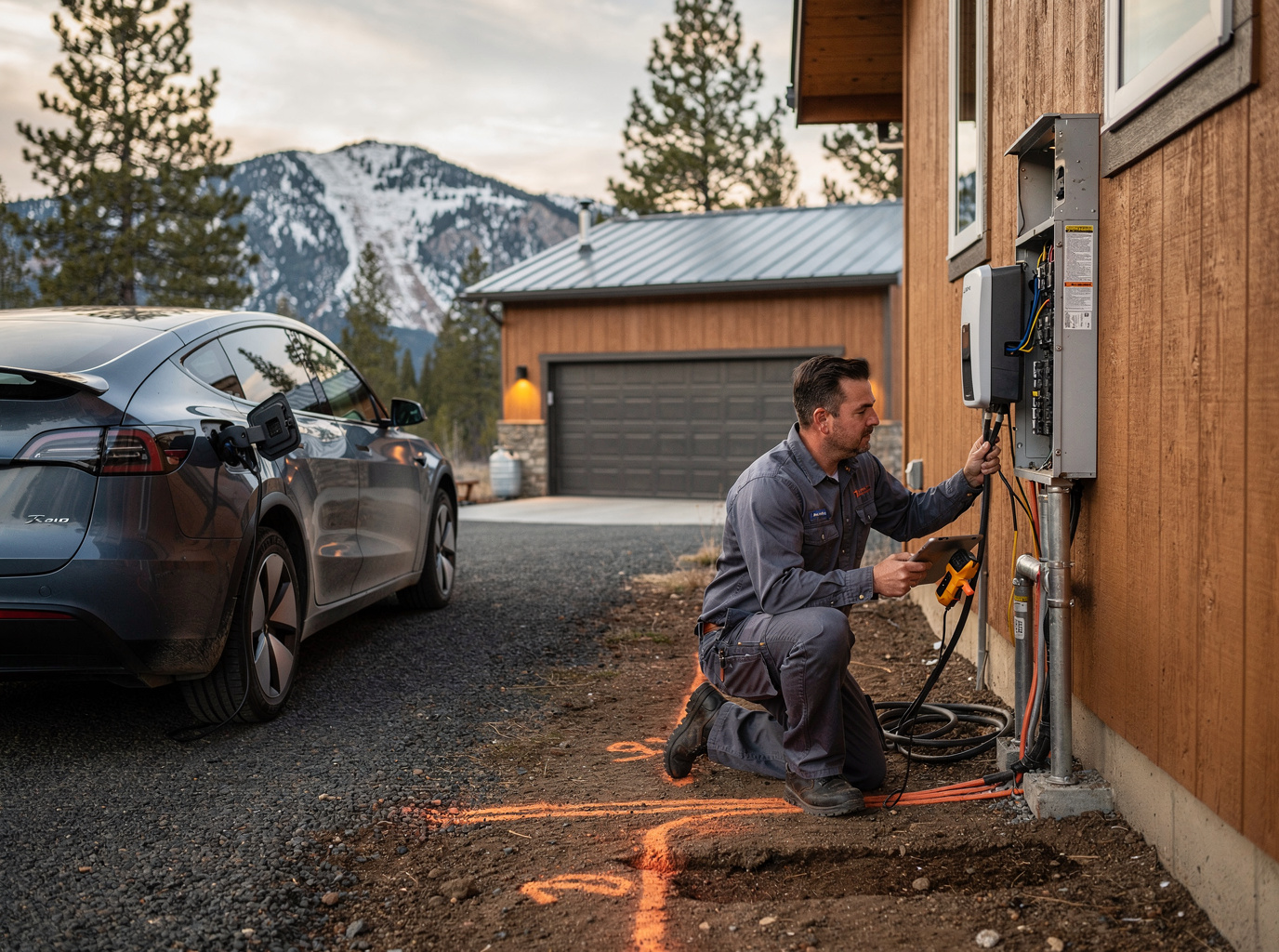
Installing a Level 2 EV charger in La Pine usually means confirming 40–60 extra amps of spare capacity, a dedicated 240-volt circuit, and weather-rated hardware that survives high-desert freeze-thaw. Most homes near Downtown La Pine and along the Little Deschutes River need a load calculation first; many 100-amp panels cannot support a 48-amp charger without an electrical panel upgrade. Outdoor units must handle cold winters and warm summers without GFCI nuisance trips. Typical dedicated-circuit work lands in the $800–$2,400 range depending on run length and whether the panel is already at capacity. The rest of this post walks through the on-the-ground factors that decide whether the job is a simple circuit or a larger upgrade.
Panel Capacity And Older Housing Stock In Deschutes County
La Pine’s mix of 1970s–1990s ranch homes and cabins often still runs 100-amp or 125-amp services. A 40-amp Level 2 charger (about 9.6 kW) needs continuous-load headroom that those panels rarely have once electric heat, well pumps, and shop tools are counted. In Downtown La Pine and nearby Sunriver-adjacent properties, we see double-tapped breakers and undersized feeders more often than in newer Bend subdivisions. A proper load calc uses the actual nameplate loads, not a guess. If the math shows less than 20 percent spare capacity, the safe path is a 200-amp service change rather than stacking another 50-amp breaker. Homes closer to La Pine State Park sometimes sit on longer utility laterals, which can add voltage drop if the charger is at the far end of the property. We document the existing main breaker size, bus rating, and available slots before quoting. That inspection also flags aluminum branch wiring common in some 1980s builds—another reason a charger circuit should be copper and properly terminated. See our cost guide for replacing an electrical panel in La Pine if the numbers point that way.
Wiring Distance, Garages, And Terrain Near The Little Deschutes
Most La Pine garages sit 30–80 feet from the panel, often through crawlspaces or along the side of a house on volcanic, rocky soil. That distance drives wire size: 6 AWG copper is typical for a 40-amp circuit; 4 AWG or larger appears when the run exceeds 75 feet or we derate for attic heat in summer. Underground conduit in this county must account for frost depth and shifting pumice soils; we use schedule 80 PVC or rigid where vehicles might cross. Detached shops near the river corridor frequently need a subpanel first so the charger does not overload a 30-amp feeder. Interior garage walls in older cabins may lack fire blocking, so we fish or surface-mount EMT rather than guess at hidden cavities. Placement also matters for snow: a charger mounted 48 inches above the slab stays clear of plow piles and still meets NEC working-space rules. If the garage is unheated, we specify outdoor-rated cable even for indoor terminations so condensation does not corrode lugs. These details are why a site visit beats a phone quote for EV charger installation here.
High-Desert Weather, Outdoor Ratings, And Freeze-Thaw Cycles
Once winter temperatures drop, outdoor EVSE in La Pine faces nightly freeze-thaw, dry air that cracks cheap plastic, and summer UV that fades housings in a few seasons. We specify NEMA 4 or 4X enclosures and hardwired units rather than plug-in models that collect ice in the inlet. GFCI protection is required; we choose chargers with robust ground-fault electronics so a wet driveway after a thaw does not nuisance-trip the whole circuit. Cable management matters: a 25-foot coiled cord left on the ground becomes a trip hazard and a chew toy for rodents in the pines. Wall-mounted retractors or a simple hook at 48 inches keep the J1772 or NACS connector off the slab. Surge protection is worth adding at the panel because lightning and utility switching are common across Deschutes County; a whole-house device protects both the charger and the rest of the house. We also check that the circuit is AFCI/GFCI as required by current code for garage and outdoor locations. These choices are not extras—they are what keep a charger working through January nights and July heat without a truck roll.
Permits, Load Calcs, And Practical Next Steps In La Pine
Deschutes County requires a permit for a new 240-volt branch circuit and any service change. The inspector will look for a load calculation, correct breaker type, and working space at the panel. We pull the permit, schedule the inspection, and leave the charger de-energized until it passes. Hours for questions or site visits are Mon–Fri 8am–6pm and Sat 9am–2pm from our shop at 15682 Sunrise Ridge Blvd. If you just bought a property, pair the charger plan with an electrical inspection after buying a La Pine property so hidden panel issues surface before drywall is opened. For homes in Downtown La Pine, alley access and older meter bases sometimes add a day for utility coordination. Bring the vehicle’s onboard charger rating (usually 32 or 48 amps) and your target overnight charge window; that data sets the circuit size instead of defaulting to the largest unit on the shelf. A clean install is a dedicated breaker, labeled circuit, and hardware that matches the climate—not the cheapest Amazon box. That is the work we actually do on these streets.